COMPANY NEWS
What is
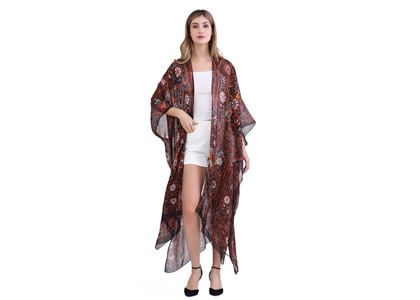
What is "Print on Demand," and how does it work?
Print on demand is a process where you collaborate with a supplier to customize white-label products (such as baseball caps or tote bags), and then sell your designs on a per-order basis.
This means you don't pay anything until the product is sold. There are no inventory issues, and therefore no risk of losing money.
Furthermore, in Print on Demand, the supplier handles everything from printing to shipping. Once you receive an order, you can complete it with just a few clicks.
Print on demand can be used to:
Test new products for existing businesses to mitigate risk.
Money from your existing fanbase. For YouTubers, comic artists, or social media influencers looking to monetize their creativity and traffic, Print on Demand is a great option.
Design original products for niche clients. For example, clients who are passionate about a particular game or anime.
Design for yourself—T-shirts, books, shoes, bags, phone cases, clocks, laptop stickers, mugs, etc. These can be given as gifts or used personally.
Advantages and Disadvantages of Print-on-Demand (COD)
Print-on-demand websites operate on a dropshipping model, where product development and shipping are handled by a third party. This is one of the easiest online businesses to start. However, before you begin, you should understand the advantages and disadvantages of this model.
Advantages
Rapid Product Creation: Once you have a design, you can quickly create products and start selling within minutes.
No Inventory or Shipping Responsibility: Shipping and delivery are handled by the supplier; you only need to focus on customer service.
Low Investment, Low Risk: Since you don't hold any inventory, you can easily adjust your strategy and experiment with your ideas.
Disadvantages
Lower Profit Margins: Naturally, because you can't buy in bulk, your unit cost will be significantly higher, so your profit margin may be low, depending on your pricing and customer acquisition strategies.
Low Control Over Shipping and Delivery: Shipping costs can vary considerably. It's also difficult to emphasize the unboxing experience and branding.
Limited Customization Capabilities: The degree of product customization depends on the supplier and the product itself. When deciding which products to design, you need to consider cost, design schedule, available design sizes, and options.
Platforms for Print-on-Demand
While most print-on-demand platforms may seem similar at first glance, there can be slight differences in factors such as products, shipping, and retail prices. Therefore, carefully consider the platform you choose before making a decision.
For example, a product might have a very low cost on a certain platform, but it could take up to twenty days to ship to the customer. So, carefully consider your needs and objectives before making a choice.
To help you choose the right print-on-demand platform, I've listed some mainstream ones below. All of these platforms are free (payment only occurs when you place an order). Furthermore, they integrate with Shopify.
Printful is a very popular choice because it offers a wide selection of products and brands (Gildan, American Apparel, etc.), an easy-to-use mockup generator, and the ability to brand your product through stickers, packaging inserts, and other information, enhancing brand value and providing a better customer experience.
Especially for apparel products, Printful offers a variety of printing technologies. Here are some things you might need to know:
Direct to Garment printing inks are printed directly onto the product, which is especially suitable for simple designs. However, you can only print on certain areas of the product.
Cut and Sew, sometimes called "full-coverage printing," involves printing sections of clothing to maximize coverage. The garment is then sewn together for a seamless finish. While this may be more expensive, it allows you to create a higher-quality product that can then be sold at a higher price.
Embroidery is perhaps the most complex technique, resulting in a 3D effect design on the final product. This is suitable for simple designs involving only a few colors, as well as products like hats that traditionally feature embroidery.
Other customization options can also affect the price. For example, printing on sleeves will incur an additional cost.
Besides clothing, Printful also offers white-label products such as mugs, pillows, framed posters, beach towels, and aprons.